
10 selected Research Luxembourg results – February 2026
12 March 2026
Luxembourg News in Science & Research
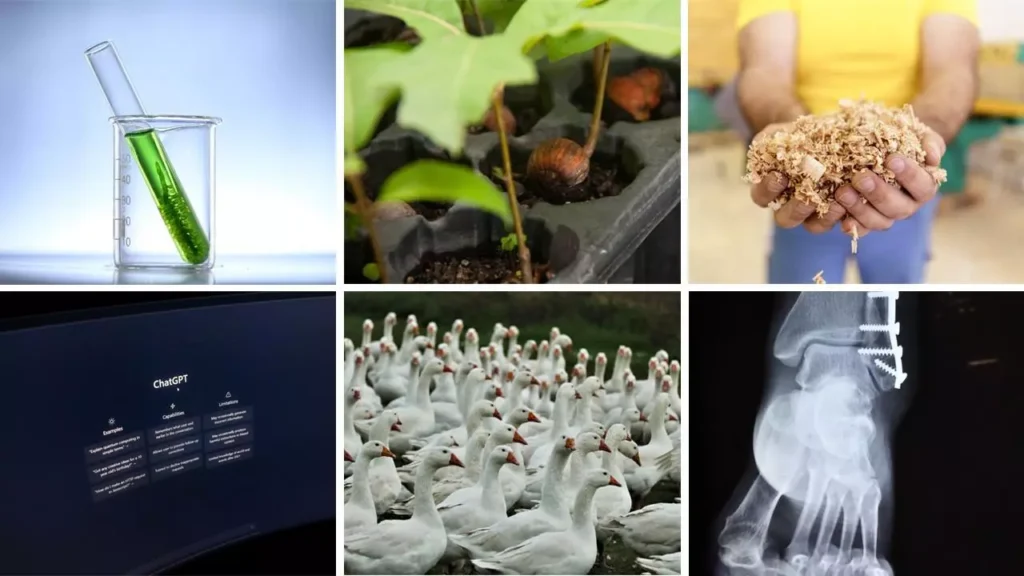
Can AI be used as evidence in a court of law? How might a person’s fat cells help promote the formation of new bone tissue? Here are the latest scientific news from the Grand Duchy.
Pexels; Flickr; Pixabay
This article was originally in French and German on science.lu
Water movement boosts algae-based biofuel production
University of Luxembourg (DPhysMS)
A new study tackles a key challenge in algae-based biofuels: how to increase lipid production (the raw material for biodiesel) without slowing cell growth. Usually, algae are stressed—through nutrient shortages, light, or temperature changes—to stimulate lipid production. But this also slows their growth and reduces total biomass.
Researchers tested a different approach: gently stirring the cultures to create slight water movement. In the motile alga Heterosigma akashiwo, applying this movement from the start of growth greatly increased lipid production—up to nearly four times more depending on the strain—without harming biomass or cell health. If applied later, however, the benefits were much smaller, making timing crucial.
This simple method could make algae-based biofuel production more efficient and sustainable, offering a potential alternative to fossil fuels.
Press Release
An embryonic gene network to treat resistant leukemia
Luxembourg Institute of Health (LIH)
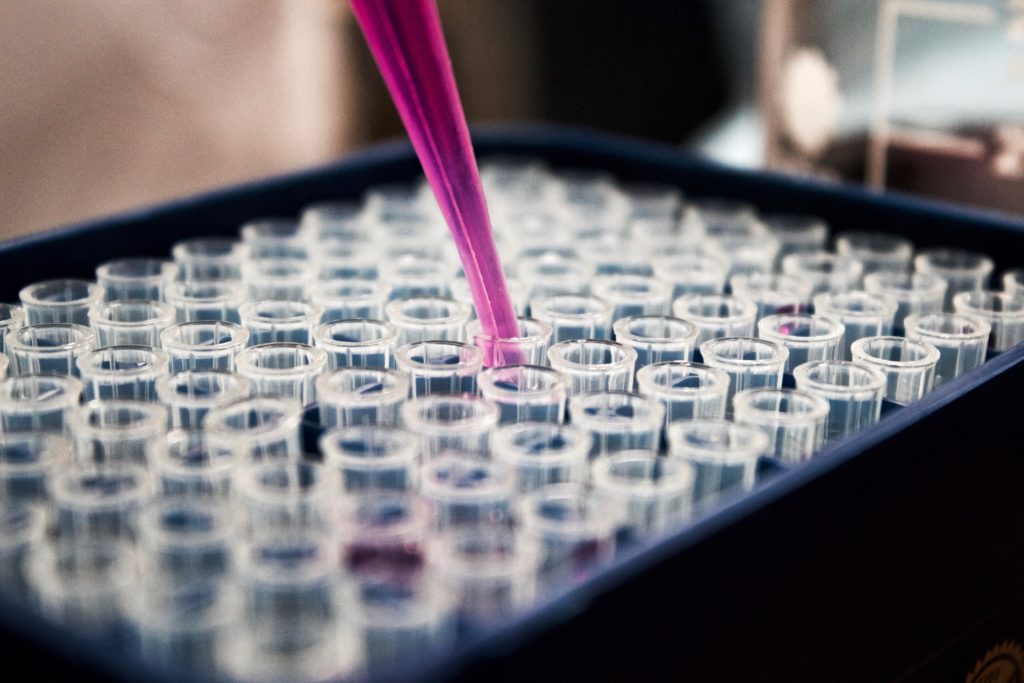
Acute myeloid leukemia (AML) is an aggressive blood cancer in which immature cells accumulate in the bone marrow instead of developing into normal blood cells. Despite current treatments, many patients relapse or become resistant to chemotherapy.
A new LIH study identifies a harmful mechanism in some severe AML cases: the reactivation of genes normally active during embryonic development. Proteins produced by these genes help cancer cells stay immature and repair damage from chemotherapy. Researchers found that blocking the interaction between two of these genes—SIX1 and EYA1—for example with the molecule Benzarone, slows leukemia cell growth and makes them more sensitive to treatment.
These findings could lead to new targeted therapies for certain leukemias and potentially other cancers.
Press Release
Discover more Luxembourg’s cancer research
Regenerated cellulose fibres from renewable sources could replace some synthetic materials
Luxembourg Institute of Science and Technology (LIST)
A new study lead by LIST provides a comprehensive review of regenerated cellulose fibres used in composite materials. These fibres are industrially produced from natural cellulose—typically wood pulp—dissolved and then reformed into filaments. Made from renewable resources, they offer consistent and reproducible properties, an advantage over traditional natural fibres such as flax or cotton. While usually more expensive than these, they remain cheaper than high-performance synthetic fibres and have environmental benefits due to their renewable origin.
Despite good mechanical performance—especially their ability to absorb energy during impacts—their industrial use remains limited. This is due to varied production methods, differences in costs and environmental impacts, and the difficulty of comparing highly diverse studies.
The authors identify where regenerated cellulose fibres are already viable, what improvements are still needed, and why a gap remains between promising lab results and large-scale industrial use.
Press Release
AI in court: can digital evidence be trusted?
University of Luxembourg (FDEF)
Police increasingly use AI tools that analyze vast amounts of data to detect suspicious behavior. But can the results produced by these systems be trusted—and how can the rights of defendants be protected?
The CRIM_AI project, funded by the FNR, examined whether current criminal trial rules are suited to AI-generated evidence. Researchers brought together experts to study how different countries use AI in criminal investigations.
The project recently resulted in a new book published by Bloomsbury Publishing. It compares practices in Luxembourg, France, Netherlands, Germany, the United Kingdom, and the United States, outlining key challenges, safeguards, and why laws must evolve alongside AI.
Press Release
Discover more AI news in Luxembourg:

Returning to work after breast cancer: key factors
Luxembourg Institute of Health (LIH), Luxembourg Institute of Socio-Economic Research (LISER)
A new study by the LIH, conducted with LISER, STM (Multi-sector Occupational Health Service) and patient partners, examines the factors influencing a return to work after breast cancer in Luxembourg. It is based on data from a digital questionnaire developed with patients as part of a Patient and Public Involvement initiative.
Among working-age women surveyed, 83% returned to work after initial treatment—rising to 93% among those with higher education. Strong work ability before diagnosis was also a key factor in later job satisfaction.
The study highlights that returning to work is important not only economically but also for recovery and social reintegration, and it notably recognizes patients as co-authors.
Press Release
Return of H5N1 and circulation of Usutu: 2025 report on avian viruses in Luxembourg
Luxembourg Institute of Health (LIH)
The LIH, together with the Luxembourg Veterinary and Food Administration (ALVA), published the first annual report on avian zoonosis surveillance in Luxembourg. Four viruses were monitored: avian influenza, Newcastle disease, West Nile virus (WNV), and Usutu virus.
For avian influenza, 22 wild birds—mainly Common Crane—tested positive for the highly pathogenic H5N1 avian influenza in autumn 2025, linked to a wave across Western Europe. No tested mammals were positive. No cases of Newcastle disease were detected in poultry farms, though some wild pigeons carried a virulent strain. No WNV cases were identified in 2025. However, Usutu virus was again detected in birds between July and September, confirming its long-term presence in the country.
The goal of the monitoring program is to detect emerging threats early, understand transmission routes, and limit impacts on livestock, wildlife, and people.
Press Release
QMeCha: free software to study quantum particles
University of Luxembourg (FSTM)
Researchers at the University of Luxembourg have developed QMeCha, a free and open-source program that simulates the behavior of particles at the quantum scale, such as electrons and atomic nuclei. The goal is to better understand how molecules react, how chemical reactions occur, and how certain materials behave.
A key feature of the software is its ability to include the surrounding environment of particles—such as nearby molecules or external forces. It is designed to run efficiently on powerful supercomputers, enabling faster and more complex calculations.
Since its release on GitHub, QMeCha has attracted interest from many scientists. Future updates aim to simulate light- and energy-related processes and further speed up computations using specialized graphics processors.
Press Release
Using a patient’s fat cells to stimulate new bone formation
Centre Hospitalier de Luxembourg (CHL)
In a new study, Luxembourg researchers identified a personalized bone substitute (NVD003), that offers a promising new approach for bones that fail to heal properly. It is made from the patient’s own fat-derived stem cells, collected through a simple liposuction. In the laboratory, these cells are processed into a ready-to-use paste that can stimulate new bone formation, support blood vessel growth, and reduce bone resorption.
Animal studies demonstrated that the graft effectively repairs significant bone defects. Early human trials are also encouraging: nine adults with fractures that had not healed regained solid bone in most cases, without side effects linked to the product. Additionally, four children with a rare condition preventing tibia consolidation experienced durable recovery.
By using the patient’s own cells, NVD003 provides a highly personalized solution and could become a safe and effective alternative to conventional bone grafts, potentially improving outcomes for patients with difficult-to-heal fractures.
Press Release
Internet use: 65–74-year-olds increasingly connected
A new STATEC report examines senior connectivity, showing that 65–74-year-olds are more and more online. In 2024, 94% of residents in this age group live in households with Internet access, up from 85% in 2019.
They mainly use the Internet to communicate, get information, and manage administrative tasks. The most common activities are emailing, online banking, and searching for goods and services. Nearly half (47%) made at least one online purchase in the past three months—mostly clothing, shoes, accessories, and printed books—compared with 79% of 25–34-year-olds and 76% of 35–54-year-olds.
Climate change: an experimental forest established in Luxembourg
Luxembourg Institute of Science and Technology (LIST)
An experimental forest designed to withstand climate change was planted this February at Eecherfeld, in Luxembourg City. The project brings together the City, the Ministry of Environment, the Administration of Nature and Forests, and LIST.
Combining scientific and educational goals, children from a forestry school helped plant the first trees of a total 3,500. Selected species—linden, oak, and beech—are native and highly climate-resilient. Species diversity is key to strengthening the forest’s resilience. The initiative also supports the city’s goal of planting 30,000 trees by 2030.
The project takes a long-term perspective: trees will reach full biological value only over several decades. Scientific data will be collected via fiber-optic sensors tracking water flow, soil moisture, and temperature, allowing researchers to study how different species respond to drought and other environmental stresses.
Press Release
Author: Diane Bertel
Editor: Lucie Zeches (FNR) ; Nicolas Stamets (Research Luxembourg)
Similar articles
-
17.08.2026

G-STEAM Opens European Community of Practice to the Public and Launches Open-Access E-Course for Mentors
SCynergy 2025 is a unique platform designed to foster collaboration across research, industry, and policy, driving real-world impact in HPC,… -
13.08.2026

10 selected Research Luxembourg results – July 2026
Coloured solar cells for a better acceptance; Sensors providing data on the health of concrete; News on the functioning of… -
23.07.2026

10 selected Research Luxembourg results – June 2026
Coloured solar cells for a better acceptance; Sensors providing data on the health of concrete; News on the functioning of… -
19.06.2026

10 selected Research Luxembourg results – May 2026
Coloured solar cells for a better acceptance; Sensors providing data on the health of concrete; News on the functioning of… -
18.05.2026

10 selected Research Luxembourg results – April 2026
Coloured solar cells for a better acceptance; Sensors providing data on the health of concrete; News on the functioning of… -
16.04.2026
10 selected Research Luxembourg results – March 2026
Coloured solar cells for a better acceptance; Sensors providing data on the health of concrete; News on the functioning of… -
12.03.2026
10 selected Research Luxembourg results – February 2026
Coloured solar cells for a better acceptance; Sensors providing data on the health of concrete; News on the functioning of… -
13.02.2026
10 selected Research Luxembourg results – December 2025 / January 2026
Coloured solar cells for a better acceptance; Sensors providing data on the health of concrete; News on the functioning of…