
10 selected Research Luxembourg results – March 2026
16 April 2026
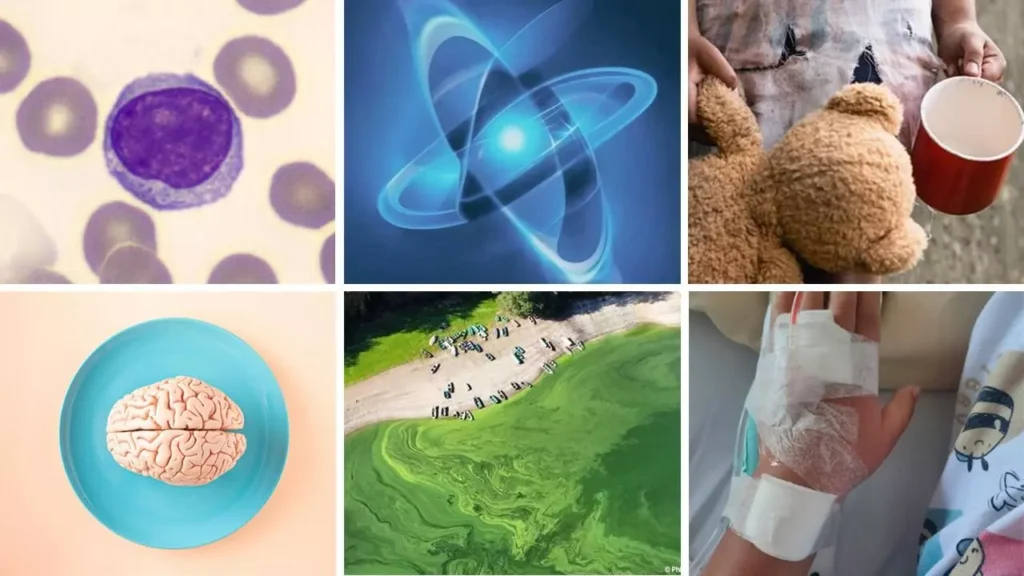
Luxembourg News in Science & Research
How is Luxembourg emerging as a European leader in AI adoption among firms? And what is the link between antioxidants and metastases? Here is the latest scientific news from the Grand Duchy.
Pexels; Flickr; Pixabay
This article was originally in French and German on science.lu
Luxembourg Leads Europe in AI, but Gaps Persist
Luxembourg Institute of Socio-Economic Research (LISER)
A new LISER policy brief shows how Luxembourg firms are integrating AI into their operations. The country ranks among Europe’s leaders in AI adoption—driven in part by its financial sector—but significant disparities remain across firm size, industry, and resources.
Based on an analysis of over 3 million company websites across Luxembourg, Belgium, France, and Germany, the study finds that 23% of Luxembourg firms use AI, compared with 16% in Germany, 10% in France, and 8% in Belgium. Access to AI skills emerges as a key driver of successful adoption. The authors stress that Luxembourg must reduce inequalities between firms and address skill shortages to fully harness AI’s potential.
This brief is the first in a series examining the drivers and impacts of AI diffusion, including its effects on labor markets, training, innovation, and economic growth.
Press Release
Listening to seriously ill children: a key to improving their well-being
University of Luxembourg (FSTM)
In a newly published article, the MOSAIK study shows that children with serious illnesses perceive their quality of life differently from adults and healthcare professionals. While parents and caregivers often assess their well-being more pessimistically, children themselves tend to feel better—even when facing severe illness.
The key factor is not their physical condition, but the quality of their relationships with family, friends, and peers. This led to the development of the “Children’s Palliative Outcomes Scale,” a tool that captures children’s own perspectives and helps tailor care to their needs.
The study also highlights a lack of specialized structures in Luxembourg, with urgent needs in training, infrastructure, and legal support. It ultimately calls for actively involving children in care design and research to improve their quality of life.
Press Release
Cancer research: an antioxidant boosts immune responses against infections and cancer
Luxembourg Institute of Health (LIH)
A recent LIH study shows that antioxidant metabolism—especially glutathione—is essential for the effectiveness of natural killer (NK) cells, key players in the immune system. Glutathione helps these cells maintain their metabolic activity and their ability to quickly detect and destroy cancerous or infected cells.
When NK cells can no longer produce glutathione, they experience increased oxidative stress, which damages vital components and severely impairs their function. As a result, their ability to stop cancer from spreading to other organs, such as the lungs, drops sharply—highlighting the central role of antioxidant metabolism in preventing metastasis.
Strengthening antioxidant metabolism in NK cells could therefore enhance immune responses and help slow cancer progression.
Press Release
Discover more Luxembourg’s cancer research



Smart cameras and AI help detect early blooms of harmful blue-green algae
Luxembourg Institute of Science and Technology (LIST)
Every summer, Luxembourg’s lakes and rivers face the risk of cyanobacteria (blue-green algae) blooms, which can release toxins harmful to humans, animals, and the environment. As climate change makes these events more frequent and unpredictable, a new study by LIST researchers have developed an innovative solution combining automated cameras and artificial intelligence.
Camera traps placed around lakes capture hourly images of the water surface. An advanced algorithm then analyzes the images, accurately distinguishing cyanobacterial blooms from reflections or other visual noise. The collected data continuously improves predictive models.
This real-time monitoring enables early warning systems, providing authorities with actionable information to better protect public health.
Press Release
Poverty in Luxembourg has doubled in 40 years: children most affected
Luxembourg Institute of Socio-Economic Research (LISER)
Between 1985 and 2023, the share of people at risk of poverty in Luxembourg rose from about 9–10% to over 17%—one of the sharpest increases among comparable European countries. Children and young adults are the most affected, while older people are now better protected. Single-parent families are particularly at risk.
This trend does not reflect an absolute decline in living standards: incomes for the poorest households have increased, but more slowly than the median income, raising the relative poverty threshold and widening inequalities. Economic growth has not been evenly shared.
In the recent policy brief, the authors argue that reducing poverty will require a mix of short-term income support, targeted benefits, and long-term investment in education and child development.
Press Release
Organoids enable personalized treatment of brain tumors
Luxembourg Institute of Health (LIH)
Organoids—3D replicas of patient-derived tissues—offer a breakthrough tool for neuro-oncology and precision medicine.
Unlike traditional 2D cell cultures, these models replicate the cellular diversity, spatial organization, and microenvironment of original tumors, allowing more accurate study of their development and treatment responses. A recent study by LIH and University of Luxembourg researchers highlights that organoids not only improve understanding of aggressive brain cancers but also allow testing therapies before clinical use.
This approach could speed up the identification of effective, patient-specific treatments.
Press Release
In times of environmental crisis, companies rely less on rules and more on collective dynamics and shared values
University of Luxembourg (SnT)
A new study examines how B Corp certification*—recognizing companies committed to social and environmental goals—expanded globally between 2007 and 2023, based on nearly 9,800 cases across 92 countries.
Researchers identify three main drivers of adoption: public policies, sustainability-focused organizations and movements, and environmental events such as natural disasters. While all generally encourage certification, this shifts during environmental crises: the influence of public policies weakens, while that of engaged actors remains strong. In unstable contexts, companies rely less on formal rules and more on collective dynamics and shared values.
The study highlights that the transition to more sustainable practices depends not only on regulation, but also on societal engagement.
Press Release
*B Corp certification is a label awarded to companies that meet high standards of social and environmental impact. It is granted by the non-profit organization B Lab, which evaluates businesses on their overall performance, including environmental impact, working conditions, governance, and societal engagement. The “B” stands for “Benefit for All.”
The certification is open to companies of all sizes and helps consumers identify more responsible and transparent businesses. Well-known examples include Patagonia and Danone.
Quantum systems can now be controlled even under continuous observation
University of Luxembourg (FSTM)
Researchers at the University of Luxembourg have developed a way to control quantum systems even while they are constantly being observed—a situation where measurement directly affects the system’s behavior. Their method stabilizes the system, corrects disturbances in real time, and allows it to follow a reliable trajectory.
This breakthrough study could transform how scientists observe, control, and use fragile quantum systems. In quantum physics, observation doesn’t just monitor a system—it alters its state and can trigger unpredictable changes. Traditionally, processes are slowed down to reduce errors, but under continuous observation this approach fails, as longer durations increase instability.
The new method paves the way for faster and more reliable quantum technologies, particularly in computing, communication, and sensing.
Press Release
SmartCityHub AI is safely transforming Luxembourg’s cities
Luxembourg Institute of Science and Technology (LIST)
SmartCityHub, an initiative by LIST, supports the integration of artificial intelligence into urban environments. The platform provides a secure, realistic space to test and validate AI solutions before deployment, ensuring they meet safety standards and ethical principles.
Through proof-of-concept projects, AI providers can trial applications—such as citizen service chatbots or digital twins for energy efficiency—before full investment. Projects in Differdange and beyond show how the platform turns complex data into actionable insights, helping optimize energy use and urban mobility.
Press Release
Discover more AI news in Luxembourg:

Young people in Luxembourg increasingly shaped by digital technologies
University of Luxembourg (FHSE)
The Youth Report 2025 highlights key trends among 12–29-year-olds in Luxembourg. About a quarter report feeling unwell or stressed, with a notable rise since 2019 in physical symptoms linked to distress—especially among young women.
Inequalities remain significant: gender, age, and social background strongly influence well-being and access to digital tools. Teenage girls are more exposed to negative online experiences, such as unsolicited sexual messages and harassment. Those aged 12–15 are particularly vulnerable to excessive use and unwanted contacts. Constant connectivity is also reshaping time use and making it harder to disconnect.
In a rapidly changing world where digital technologies deeply shape socialization, the report stresses the need to equip young people with the skills to seize opportunities and face the challenges of the digital world.
Author: Diane Bertel
Editor: Lucie Zeches (FNR) ; Nicolas Stamets (Research Luxembourg)
Similar articles
-
24.09.2026

10 selected Research Luxembourg results – August 2026
Coloured solar cells for a better acceptance; Sensors providing data on the health of concrete; News on the functioning of… -
17.08.2026
G-STEAM Opens European Community of Practice to the Public and Launches Open-Access E-Course for Mentors
SCynergy 2025 is a unique platform designed to foster collaboration across research, industry, and policy, driving real-world impact in HPC,… -
13.08.2026

10 selected Research Luxembourg results – July 2026
Coloured solar cells for a better acceptance; Sensors providing data on the health of concrete; News on the functioning of… -
23.07.2026

10 selected Research Luxembourg results – June 2026
Coloured solar cells for a better acceptance; Sensors providing data on the health of concrete; News on the functioning of… -
19.06.2026

10 selected Research Luxembourg results – May 2026
Coloured solar cells for a better acceptance; Sensors providing data on the health of concrete; News on the functioning of… -
18.05.2026

10 selected Research Luxembourg results – April 2026
Coloured solar cells for a better acceptance; Sensors providing data on the health of concrete; News on the functioning of… -
16.04.2026
10 selected Research Luxembourg results – March 2026
Coloured solar cells for a better acceptance; Sensors providing data on the health of concrete; News on the functioning of… -
12.03.2026
10 selected Research Luxembourg results – February 2026
Coloured solar cells for a better acceptance; Sensors providing data on the health of concrete; News on the functioning of…