
10 selected Research Luxembourg results – November 2025
18 December 2025
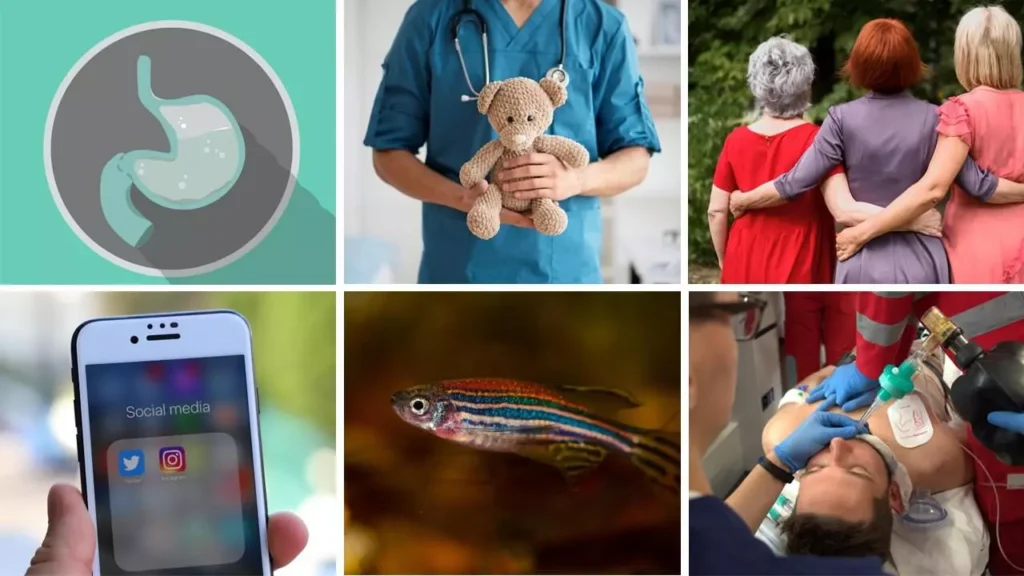
Luxembourg News in Science & Research
Where did Luxembourg break ground on its first Space Campus? Can we learn to regulate our gastric activity? Here are the latest scientific news from from Luxembourg.
Pexels; Pixabay; Flickr
This article was originally in French and German on science.lu
Can we learn to regulate our gastric activity using visualization techniques?
University of Luxembourg (FHSE)
This study examined whether gastric biofeedback, using virtual reality (VR) or a standard 2D screen, can help regulate stomach activity essential for normal digestion. Biofeedback provides real-time visual feedback of bodily functions, enabling participants to learn how to modulate their gastric activity.
Ninety-four participants were divided into three groups: VR, 2D, and a control group without visual feedback. Both biofeedback groups showed increased normal gastric activity, reduced abnormal rhythms, and better management of physical discomfort. No significant difference was found between VR and 2D, suggesting that simpler 2D biofeedback may be just as effective and more accessible.
Cardiac arrests and prehospital emergencies: less delay, more survivors
Centre Hospitalier de Luxembourg (CHL), University of Luxembourg (FSTM)
In 2018, Luxembourg reorganized its prehospital emergency system by creating the Grand-Ducal Fire and Rescue Corps (CGDIS), unifying all emergency services to improve coordination and response times. This study assessed the impact of the reform on out-of-hospital cardiac arrests (OHCA).
Results show significantly shorter response times and a nearly threefold increase in survival. Improvements may be linked to more bystander CPR, telephone guidance, and faster ambulance arrival. Each minute of delay reduces survival by 17%, though CPR quality by untrained bystanders remains a challenge.
The study, lead by a Luxembourg team of researchers, demonstrates that coordinated emergency systems can greatly improve outcomes, while continued public training is key to further increasing survival.
Luxembourg breaks ground on first Space Campus building in Belval
Luxembourg Institute of Science and Technology (LIST)
Luxembourg has begun construction of the first building of its future Space Campus in Belval, marking an important milestone in the development of its space research infrastructure.
The building will house Europe’s largest thermal vacuum chamber, commissioned by the European Space Agency (ESA) and operated by ESRIC, a center hosted at LIST. This unique facility will allow components to be tested under conditions similar to those on the Moon, with extremely high vacuum levels, extreme temperatures, and the use of artificial lunar regolith.
By providing the country with unique scientific equipment, Luxembourg strengthens its ability to support lunar missions and foster a dynamic space ecosystem.
Press Release
Discover more space news on Research Luxembourg here



Social cohesion report: Purchasing power rising, but persistent inequalities
STATEC’s 2025 work and social cohesion report shows that in 2024 the average disposable income of Luxembourg households reached nearly EUR 7,700 per month, with an average standard of living of EUR 4,900, indicating improved purchasing power despite inflation.
However, inequalities remain strong: the top 20% have a standard of living 4.7 times higher than the bottom 20%. The persistent at-risk-of-poverty rate is 6.1%, rising to 26.9% after deducting fixed expenses such as rent or mortgages.
The report also points to ageing-related challenges, as one quarter of pensioners receive a pension below the legal minimum, particularly women and foreign nationals.
European Public Schools: Flexible Language Approach Shows Promising Results
University of Luxembourg (LUCET)
A new report by the Luxembourg Centre for Educational Testing (LUCET) presents early longitudinal data on European Public Schools (EPS) in Luxembourg. The schools’ linguistic flexibility appears to support learning and help reduce some educational inequalities.
EPS students generally perform better in mathematics than those in the Luxembourg curriculum, including students from less advantaged backgrounds or non-Luxembourgish/German-speaking homes. In languages, EPS show gains in oral comprehension and early literacy when instruction aligns with the family language.
Results should be interpreted cautiously, as EPS currently serve a relatively privileged student population.
Press Release


Zebrafish help study Zellweger spectrum disorders
University of Luxembourg (LCSB)
Zellweger spectrum disorders (ZSD) are rare diseases caused by peroxisome dysfunction, affecting metabolism. The study lead by Luxembourg researchers created a mutant zebrafish model to study ZSD, which can cause cognitive deficits, liver and neurological problems, and physical malformations.
About 10% of the fish survive to adulthood, showing key ZSD features such as abnormal liver fat and vision issues. Analyses revealed cellular stress and nervous/visual dysfunctions.
This model helps explore how fat accumulation causes damage and could guide new treatment approaches.
Caring for seriously ill children is demanding but rewarding for nurses
University of Luxembourg (FSTM)
Caring for children with severe, life-limiting illnesses is emotionally demanding for nurses, yet it can foster meaningful personal and professional growth.
This review, lead by researchers at the University’s Faculty of Science, Technology and Medicine examines qualitative studies from 2005 to 2025 conducted in several countries, including the United States and Canada. Six key themes emerged: existential and life-perspective changes, emotional and psychological development, professional identity, relational enrichment, search for meaning, and spiritual transformation. Growth often stems from adversity, supported by close relationships with families and reflective practice.
Providing support through training, reflection, and structured institutional measures is crucial to protect nurses’ mental health, retain them in the profession, and ensure high-quality pediatric palliative care.
The Internet Largely Dominates Other Media as a Source of Information
University of Luxembourg (FHSE)
The Internet is now the main source of information for Luxembourgers, far ahead of radio, television, and print media. Social media are key gateways to the news. Young people (18–34) get their news almost exclusively online via TikTok, Instagram, and Snapchat, while those over 55 rely on TV, radio, and traditional newspapers. These findings come from the new MediaLux report, based on a representative 2023 survey of 1,600 Luxembourg respondents.
Trust in journalists’ political and economic independence is questioned by nearly a third of respondents. Almost 7 in 10 feel regularly exposed to false information online, especially on social media. According to the authors, these results mirror European trends: rapid digitalization, growing distrust of traditional media, and concern over disinformation.
MediaLux reports will be published annually to track information habits in Luxembourg.
Press Release
Optimizing Business Locations: Inside Luxembourg’s Mobility Data Factory
University of Luxembourg (FSTM)
Choosing the location of a store, service, or office depends on analyzing many factors: mobility flows, accessibility, and travel behaviors. At the University of Luxembourg, the Mobility Data Factory project transforms this complex information into practical tools to help businesses and public decision-makers make the best choices.
Using artificial intelligence, digital twins, and advanced mobility models, the team can quickly analyze large volumes of data and translate them into clear recommendations. The results are then presented in simple, visual dashboards that make travel trends easy to understand.
The goal of the Mobility Data Factory is to enable more sustainable, efficient, and data-driven investment decisions.
Luxembourg’s history of its gas industry and 125 years of SUDenergie
University of Luxembourg (C2DH)
To mark its 125th anniversary, SUDenergie is carrying out a research project in collaboration with the C2DH to trace the company’s history and its role in the development of the gas industry in Luxembourg.
Founded in 1899 with the construction of a gas plant in Esch-sur-Alzette, the company is part of a transnational industrial history shaped by the activities of German and French firms, as well as by the contribution of many migrant workers from northern Luxembourg and Germany. The project highlights the transformation of gas use—from public lighting to heating—and its technical evolution, from locally produced coal gas to imported natural gas.
Available on the website 125joer.sudenergie.lu, this history is illustrated with archives, personal accounts, and employee lists from the gas plants in Esch, Differdange, and Kayl. Two interactive maps also offer new perspectives for historical and genealogical research.
Press Release
Author: Diane Bertel
Editor: Lucie Zeches (FNR) ; Nicolas Stamets (Research Luxembourg)
Similar articles
-
12.03.2026
10 selected Research Luxembourg results – February 2026
Coloured solar cells for a better acceptance; Sensors providing data on the health of concrete; News on the functioning of… -
13.02.2026
10 selected Research Luxembourg results – December 2025 / January 2026
Coloured solar cells for a better acceptance; Sensors providing data on the health of concrete; News on the functioning of… -
18.12.2025
10 selected Research Luxembourg results – November 2025
Coloured solar cells for a better acceptance; Sensors providing data on the health of concrete; News on the functioning of… -
20.11.2025

10 selected Research Luxembourg results – October 2025
Coloured solar cells for a better acceptance; Sensors providing data on the health of concrete; News on the functioning of… -
16.10.2025
10 selected Research Luxembourg results – September 2025
Coloured solar cells for a better acceptance; Sensors providing data on the health of concrete; News on the functioning of… -
07.08.2025
10 selected Research Luxembourg results – July 2025
Coloured solar cells for a better acceptance; Sensors providing data on the health of concrete; News on the functioning of… -
16.07.2025

Young at heart: Luxembourg ranked as the EU’s second youngest country
Luxembourg’s population, with an average age of 39.7, is one of the youngest in the EU. This is another strong… -
03.07.2025

10 selected Research Luxembourg results – June 2025
Coloured solar cells for a better acceptance; Sensors providing data on the health of concrete; News on the functioning of…